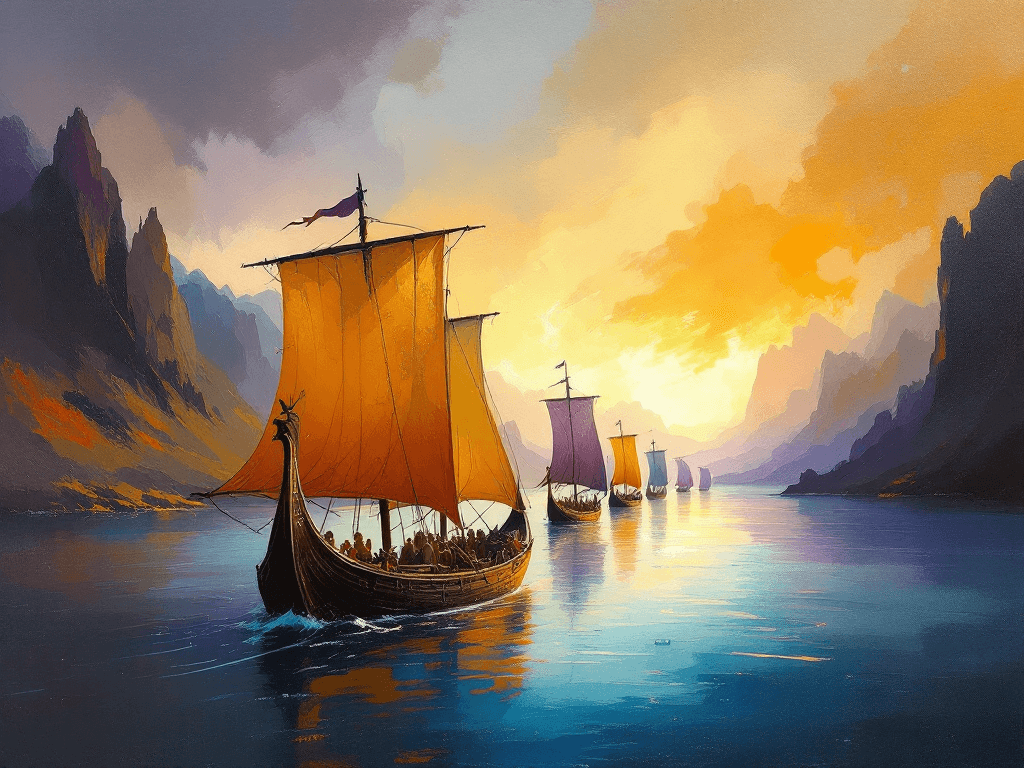
Most leadership models operate with three to six types: servant leader, transformational leader, transactional leader, and so on. These models are useful as an overview, but for the leader using them they often feel too coarse. You recognise yourself partially in two or three categories, and that overlap leaves you with little traction for concrete choices.
The sixteen Norse archetypes offer a finer grid. They are not invented from thin air: each archetype emerges from a specific combination of Big Five scores. Your leadership style is the predictable consequence of your personality profile — and the archetypes give you a language to talk about that style.
This article works out seven leadership styles using seven Norse archetypes, with strengths, shadows and behavioural advice for each. Not all sixteen archetypes appear in detail — that would be a book — but you almost certainly recognise your own pattern in these seven, or in a combination of two adjacent ones.
Odin: the strategic visionary
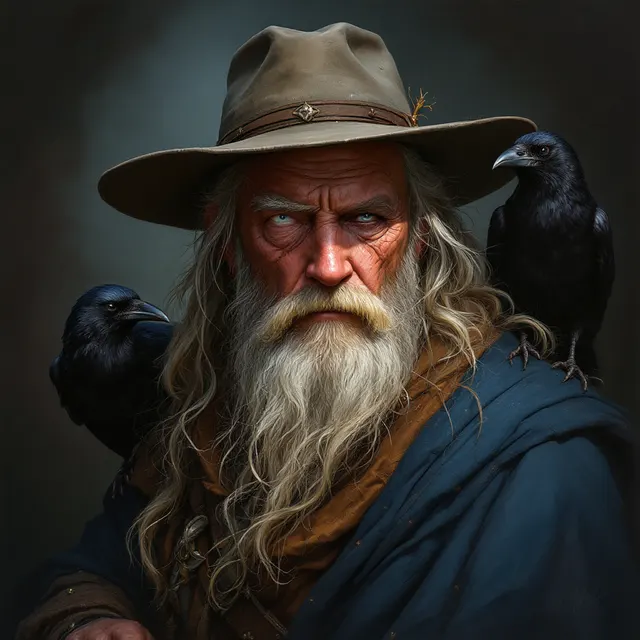
Odin gave up an eye for wisdom and hung nine days on Yggdrasil to know the runes. He is the leader who thinks at a distance, sees the long term, and is prepared to sacrifice short-term comfort for insight.
Big Five profile: high openness, moderate-to-high conscientiousness, low-to-moderate extraversion, moderate agreeableness, moderate neuroticism.
Strength: strategic clarity. An Odin leader sees patterns others miss and can move an organisation into unknown territory without certainty but with conviction.
Shadow: distance. Odin can think so far ahead that the team no longer follows. Decisions feel like they come from above, with the reasoning invisible.
Advice: make your thinking explicit. What is obvious to you after three months of reflection is a black box to the team. Invest in unpacking — not as a sales pitch, but as shared context.
In practice: the Odin leader pivots before the market does — the CEO who reorients the company ahead of the shift, or the research director who funds an unproven technology because she sees where the field is heading.
Thor: the direct executor
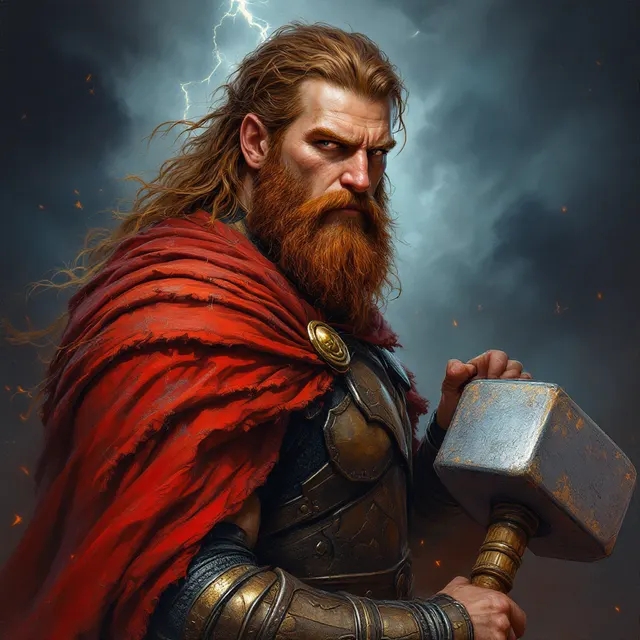
Thor solves problems by attacking them. No three strategy sessions, no working group, no report — a hammer and a clear direction. He is the leader you call in a crisis.
Big Five profile: high extraversion, high conscientiousness, moderate openness, low-to-moderate agreeableness, low-to-moderate neuroticism.
Strength: execution. A Thor leader delivers. Plans become concrete fast, deadlines are met, people know where they stand.
Shadow: bluntness. Thor can run over a nuance because speed feels more important than tact. Good ideas from quieter team members are not heard because they are not spoken loudly enough.
Advice: schedule silent time in meetings. Explicitly ask who disagrees. Your natural pace intimidates the people you probably most want to hear from.
In practice: the Thor leader is the operations director who stays until the crisis is resolved, or the manager who goes to bat for a direct report facing unfair criticism from senior leadership.
Freyja: the relational connector

Freyja brings people together. She sees the emotional dynamics of a group and knows who belongs where. Her leadership rests not on authority but on connection.
Big Five profile: high extraversion, high agreeableness, high openness, moderate conscientiousness, moderate neuroticism.
Strength: psychological safety. A Freyja leader creates teams where people feel safe to be vulnerable, admit mistakes and raise difficult topics. Edmondson (1999) showed that this is the strongest predictor of team effectiveness in complex environments.
Shadow: conflict avoidance. Freyja can invest so much in harmony that necessary confrontations are postponed. Poor performance gets softened instead of named.
Advice: practise direct feedback. Not harsh, not blunt, but unambiguous. Your relational capital is high enough to carry critical messages.
In practice: the Freyja leader notices that a quiet team member has disengaged before anyone else does, and builds coalitions across departments that normally do not talk to each other.
Tyr: the principled leader
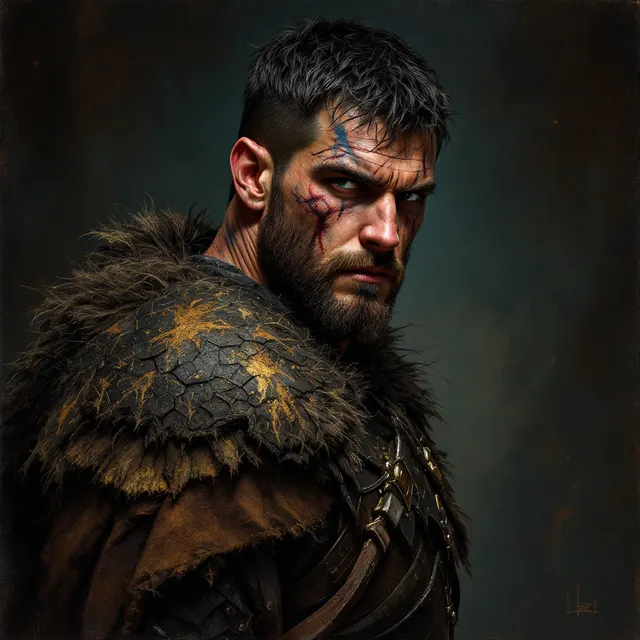
Tyr gave up his hand to bind Fenrir — a symbol of what a leader sacrifices to keep a promise. He is the leader who does not negotiate his principles, even under pressure.
Big Five profile: high conscientiousness, low-to-moderate extraversion, moderate openness, moderate agreeableness, low neuroticism.
Strength: reliability. A Tyr leader does what he promises. The team knows that agreements hold and that decisions are consistent.
Shadow: rigidity. Tyr can cling to a rule that no longer serves its purpose, or defend a principle against a better solution.
Advice: distinguish between principle and habit. Periodically reviewing your own "hard lines" prevents you from holding positions no one is served by.
In practice: the Tyr leader is the compliance officer who flags the issue leadership does not want to hear, or the manager who applies the same evaluation criteria to the CEO's nephew as to everyone else.
Loki: the adaptive innovator
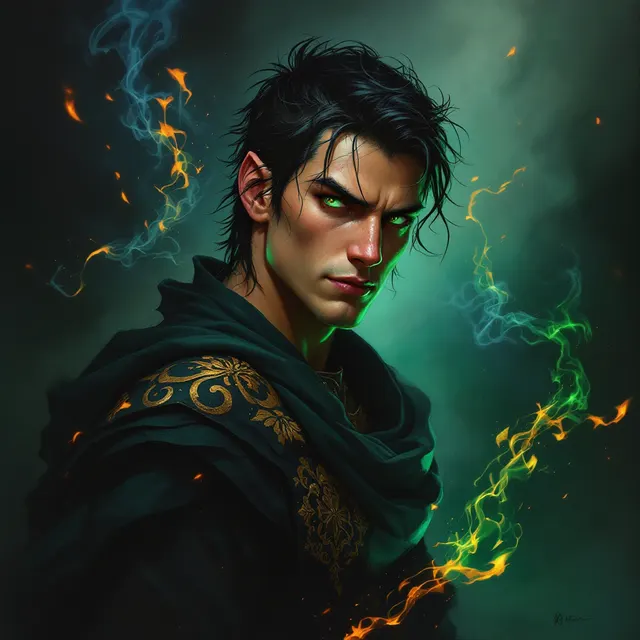
Loki is not a villain — he is the archetype that tests the rules, asks awkward questions and breaks open existing structures. In organisations he is often the leader who challenges conventions and explores new directions.
Big Five profile: high openness, high extraversion, low conscientiousness, moderate agreeableness, moderate-to-high neuroticism.
Strength: innovation. A Loki leader sees what could be unorthodox and has the courage to try it. Stagnating organisations need him.
Shadow: chaos. Loki can start so many initiatives that none get finished. His team burns out because nothing ever settles.
Advice: pair yourself with a Tyr or a Frigg on your team. Someone who operationalises your ideas means novelty actually lands rather than hovering as promise.
Frigg: the orchestrating organiser

Frigg is the goddess who maintains the order of the household — not as a servant but as an architect. She is the leader who makes complexity invisible by coordinating everything on time.
Big Five profile: high conscientiousness, high agreeableness, moderate extraversion, moderate openness, moderate neuroticism.
Strength: execution capacity in complex environments. A Frigg leader keeps twenty balls in the air without the team realising there were twenty balls.
Shadow: invisible overload. Frigg carries the burden of structure for everyone, and rarely shows what she gives up to keep things running.
Advice: delegate visibly. A Frigg leader who absorbs everything trains her team to wait passively. Hand off work explicitly, even if you could do it faster yourself.
Heimdall: the vigilant watchman
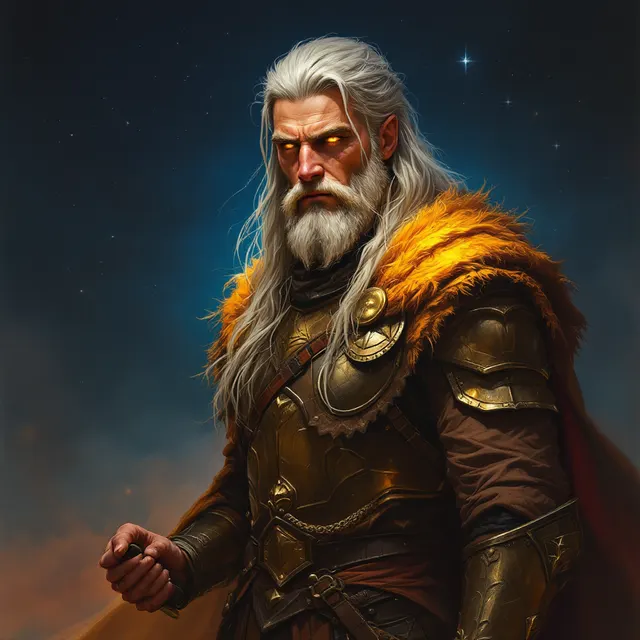
Heimdall hears grass grow and sees a hundred miles. He is the leader who picks up signals others miss — especially signals that forecast danger or opportunity.
Big Five profile: high conscientiousness, moderate openness, moderate extraversion, moderate agreeableness, moderate-to-high neuroticism.
Strength: alertness. A Heimdall leader sees problems before they become acute. He is the one who says "I think we have a problem coming here" while everyone is still optimistic.
Shadow: hypervigilance. Heimdall can create an environment in which every signal is a threat. The team exhausts itself being permanently on edge.
Advice: calibrate your alarm system. Not every signal deserves a meeting. Learn to distinguish "interesting signal — watch" from "critical signal — act now".
How to find your archetype
No leader is one archetype purely. Most people recognise themselves in two or three, with one dominant pattern. Your dominant archetype emerges from your Big Five profile — not from a choice or a wish, but from the measurable structure of your personality.
That has practical consequences. It means your leadership style does not move freely: you can deviate in specific situations, but your baseline pulls you back. Effective leaders know their baseline, use its strengths deliberately, and build external supports where the shadow would otherwise undermine them — a complementary colleague, a mentor who gives feedback, a protocol that compensates.
For the practical translation to team composition, see our team composition article. There we work out how combinations of archetypes reinforce or clash.
Want to know which Norse archetype shapes your leadership? Take the free Big Five test — five minutes, and you receive your dominant archetype plus your secondary patterns, with advice tailored to your specific combination.
For related depth: Norse mythology personality types explained, Norse mythology leadership styles, Big Five facets explained.
References
- Costa, P. T., & McCrae, R. R. (1992). Revised NEO Personality Inventory (NEO-PI-R) professional manual. Psychological Assessment Resources.
- Edmondson, A. (1999). Psychological safety and learning behavior in work teams. Administrative Science Quarterly, 44(2), 350–383.
- Judge, T. A., Bono, J. E., Ilies, R., & Gerhardt, M. W. (2002). Personality and leadership: A qualitative and quantitative review. Journal of Applied Psychology, 87(4), 765–780.
- McAdams, D. P. (2006). The Person: A New Introduction to Personality Psychology. Wiley.
- Roberts, B. W., Walton, K. E., & Viechtbauer, W. (2006). Patterns of mean-level change in personality traits across the life course. Psychological Bulletin, 132(1), 1–25.