
The question "who belongs in which team" is answered in most organisations on the basis of skills and availability. Who can do this, who has time. The result is teams that are individually competent but often collectively suboptimal. Bell (2007) showed that the personality composition of teams has a modest but consistent effect on team performance — particularly on dimensions such as conscientiousness, openness and agreeableness.
The sixteen Norse archetypes give a practical language for making that composition explicit. Instead of speaking vaguely of "complementary styles", you can name that your team has three Thors and no Heimdall, and what that predicts about the type of mistakes the team will make. This article works through four composition patterns with grounding in team psychology and concrete advice for HR and team leaders.
What personality does and does not predict at the team level
Before the patterns themselves, three calibrating findings from the meta-analysis by Peeters et al. (2006):
A high average level of conscientiousness in a team predicts better performance on virtually all tasks. This is the strongest team-level effect personality psychology has found. A team where half are conscientious and the other half are not performs worse than a team where everyone scores at the average.
Variation in extraversion is beneficial for teams that do both interactive and analytic work. Too many extraverts produce teams that brainstorm without finishing anything; too few produce teams that analyse without ever deciding. A mix produces better outcomes on mixed tasks.
Variation in agreeableness is usually unhelpful. Teams with widely diverging agreeableness experience more conflict over who does what and how decisions get made. A reasonably uniform middle level works better than a mix of very warm and very direct.
With those three frames in mind, four composition patterns.
Pattern 1: the mono-Thor team
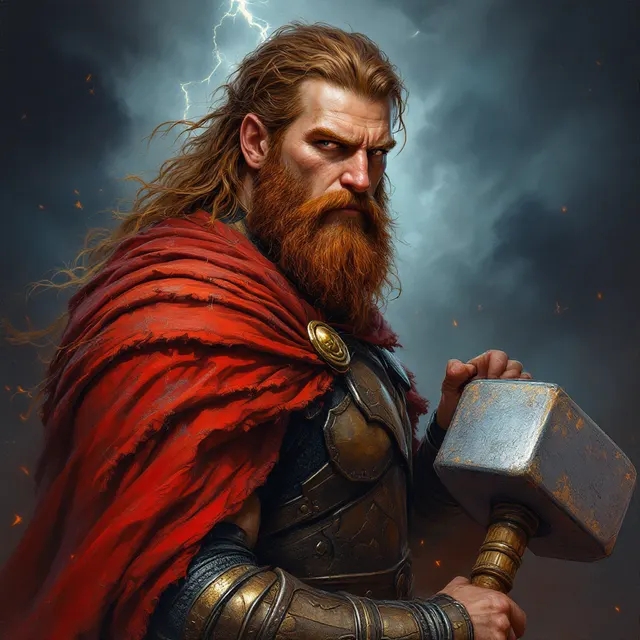
A team made up mostly of high-energy, direct-acting people. Many sales teams, fast startups and operational crisis teams fit this pattern. The Thor archetype (high extraversion, high conscientiousness, low-to-moderate openness) dominates.
Strength: speed. Decisions get made fast, execution is high, nobody waits. For well-defined execution tasks, this is hard to beat.
Risks: this team lacks nuance and long-term perspective. It sees emerging strategic problems only when they are acute, and then solves them with more Thor — working harder — rather than with different thinking patterns. Innovation outside familiar territory rarely happens.
Composition advice: add at least one Odin (high openness, moderate extraversion) or Heimdall (high openness, low extraversion). Their role is not to brake Thor, but to supply strategic context the team would otherwise miss.
Pattern 2: the mono-Odin team
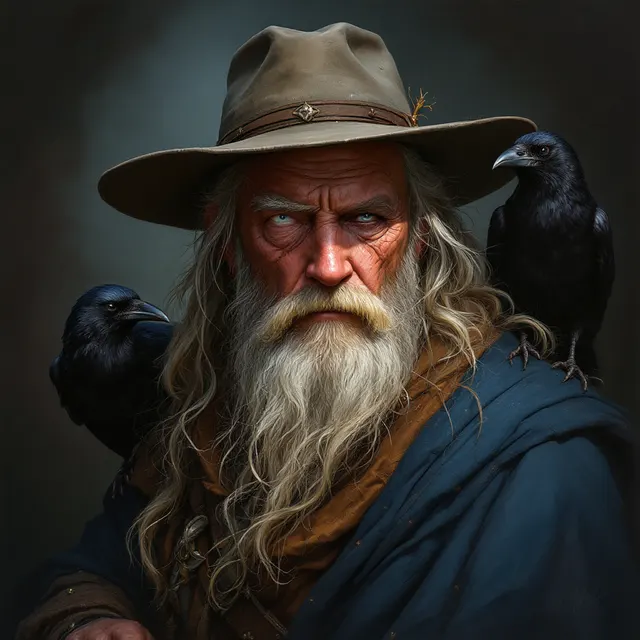
A team of thinkers. Many strategy, research and consulting teams fit this pattern. High openness, moderate-to-low extraversion, often moderate conscientiousness.
Strength: depth. This team sees patterns others miss, weighs options carefully and produces high-quality analyses.
Risks: no execution. Decisions get endlessly reconsidered, and nothing gets finished. The team can spend years in a design phase. Beyond that, this type of team often produces ideas that are operationally unexecutable because no one knows the implementation reality.
Composition advice: add at least one Thor (execution) and one Frigg (organisation). The Frigg role is particularly underrated: she is the one who turns the design into a plan people can actually work to. Without her, Odin work remains a thick document on a shelf instead of a working implementation.
Pattern 3: the mono-Freyja team

A team of connectors. Many HR, customer success and culture teams fit this pattern. High extraversion, high agreeableness, often high openness.
Strength: psychological safety. Edmondson (1999) showed this is the strongest predictor of team effectiveness in complex environments. People feel free to take risks, admit mistakes and raise difficult subjects.
Risks: conflict avoidance. This team can postpone difficult decisions — letting someone go, introducing an unpopular policy, confronting another department — until the pain of waiting exceeds the pain of the decision itself. Beyond that, permanent harmony can mean that bad ideas do not get critically tested.
Composition advice: add at least one Tyr (principled, direct). His role is to serve as an internal source of friction: he asks the questions no one wants to ask and holds the group accountable when it wants to drift into collective congeniality.
Pattern 4: the mixed "role-distributed" team
A team deliberately built with four to six different archetypes. Often senior cross-functional teams or leadership teams.
Strength: this team can handle virtually any type of problem because there is a representative for each thinking pattern.
Risks: coordination overhead. Different archetypes have different working styles, communication patterns and time horizons. Without explicit agreements, this team can waste endless hours on misunderstandings about how to decide.
Composition advice: invest in explicit process agreements. Which type of decision is taken by whom, on what timeline, with what input? This team benefits disproportionately from a Frigg figure who guards the process architecture — not to micromanage, but to absorb the coordination load that would otherwise fall on everyone.
Practical implications for HR
For HR professionals applying these insights, three pieces of practical advice.
Do the assessment for the whole team, not just for individual hiring. Personality data becomes much more valuable when you can look at teams as a whole. A Big Five test for six people gives you a team profile you can make much more concrete statements about than about one individual. Anyone building teams around personality will find the method and the evidence gathered in one place.
Use archetypes as conversation language, not as labels. The goal is not "you are an Odin" as a classification. The goal is "you have strong Odin qualities, and on this team that is the role we see you fitting most strongly". People accept narrative framing better than typology labels.
Prevent monoculture in hiring. Many teams recruit people who "fit the culture", which in practice means: people who resemble the existing team members. That worsens the monocultures described above. Deliberate hiring of complementary archetypes — even if they initially feel "different" — produces better long-term outcomes.
For the broader context of psychological safety in team composition, see our article on the topic. And for personality testing for team building, the more general guide.
What personality cannot solve
Three caveats to be honest about the limits of personality data in team composition.
Skills and experience remain primary. An Odin who lacks knowledge of the domain is not an Odin in that domain — he is an outsider with a tendency to think strategically. Personality adds to skill; it does not replace it.
Culture and context determine what works. The same archetype behaves differently in a hierarchical versus a flat organisation, in a crisis versus a stable period, in a familiar versus an unknown domain. Personality is a disposition, not a prediction.
People change — modestly, but they do. Roberts et al. (2006) showed in a meta-analysis that Big Five traits are stable but not fixed. Someone who is now Thor may in five years have developed more Frigg qualities. Composition advice must account for growth trajectories, not just a snapshot.
Want to map your team with Norse archetypes? Take the free Big Five test — five minutes per person, and you have a team profile you can base concrete choices on.
For related depth: Norse mythology personality types explained, Norse archetype leadership styles, Norse archetypes workplace dynamics, Team personalities improve collaboration.
References
- Bell, S. T. (2007). Deep-level composition variables as predictors of team performance: A meta-analysis. Journal of Applied Psychology, 92(3), 595–615.
- Edmondson, A. (1999). Psychological safety and learning behavior in work teams. Administrative Science Quarterly, 44(4), 350–383.
- Peeters, M. A. G., Van Tuijl, H. F. J. M., Rutte, C. G., & Reymen, I. M. M. J. (2006). Personality and team performance: A meta-analysis. European Journal of Personality, 20(5), 377–396.
- Roberts, B. W., Walton, K. E., & Viechtbauer, W. (2006). Patterns of mean-level change in personality traits across the life course. Psychological Bulletin, 132(1), 1–25.
- Costa, P. T., & McCrae, R. R. (1992). Revised NEO Personality Inventory (NEO-PI-R) professional manual. Psychological Assessment Resources.