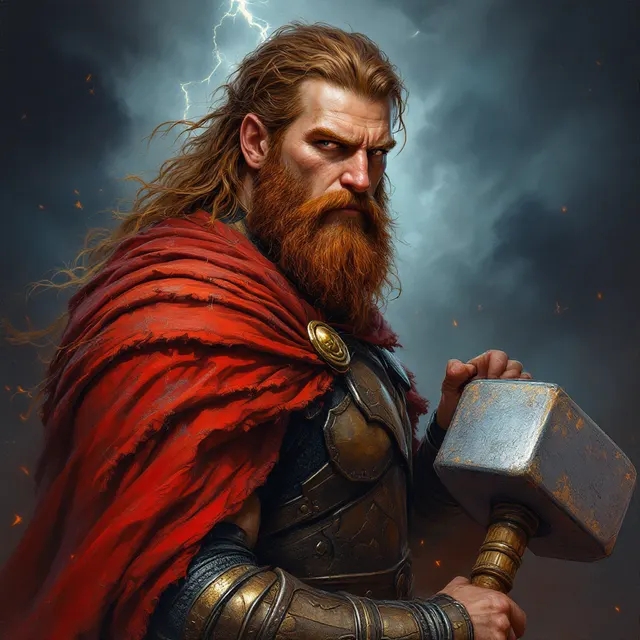
Thor
The Protector
FireCourageous, direct, and energetic. Thor is always ready to protect others and faces challenges head-on with full force.
Mythological Background
Thor, god of thunder, protects Midgard with his hammer Mjolnir. Where others hesitate, Thor steps forward. His strength is not just physical — it is the courage to stand between danger and the vulnerable.
Key Traits
Big Five Profile
Positive values (+) indicate strong correlation, negative values (-) indicate inverse correlation with the Big Five dimension.
Strengths
You are a natural protector with boundless energy. Your directness and courage inspire others. When a challenge arises, you step up without hesitation. People feel safe in your presence.
Shadow Side
Your directness can become aggression. Under stress, you may react impulsively, override others' opinions, or use force where diplomacy would be more effective. You can struggle to show vulnerability.
Growth Path
Channel your energy into patience. True strength also lies in listening, allowing others space, and recognising that not every problem needs a forceful solution.
Related Archetypes


Read more
Norse archetypes vs Jung's 12 archetypes: which framework actually fits?
Jung gave us the Hero, the Sage, the Caregiver — twelve archetypes that shaped modern personality work. Norse mythology offers a richer cast of sixteen, with built-in shadow sides and a scientific bridge to Big Five.
Norse mythology personality types explained: the 16 archetypes and what they mean
Norse mythology gives personality work something most frameworks lack: morally complex characters with built-in shadow sides. A guided tour of the sixteen archetypes, what each one means, and how they map to Big Five traits.
Norse archetypes in workplace dynamics: understanding your team
Discover how Norse mythology archetypes reveal workplace behavior patterns. Practical tips for meetings, conflict resolution, and deadline management.
Discover your archetype
Curious which archetype fits you? Take the free assessment and find out.