16 Norse Archetypes
Discover the mythological personality profiles behind Elementals
Every person carries a unique mix of personality traits. In Elementals, we map these traits to 16 archetypes from Norse mythology — each representing a distinct pattern of thinking, feeling, and acting. Discover which archetype matches your personality.
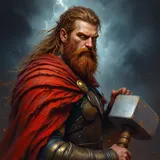
Thor
The Protector
FireCourageous, direct, and energetic. Thor is always ready to protect others and faces challenges head-on with full force.

Freyja
The Connector
WaterEmpathetic, creative, and connecting. Freyja brings people together and sees the beauty in every individual.
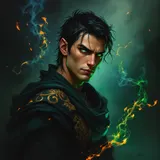
Loki
The Transformer
WindResourceful, unconventional, and chaotic. Loki breaks established patterns and finds solutions where no one else looks.
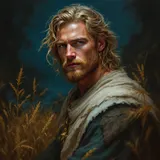
Frey
The Peacemaker
WaterHarmonious, reliable, and caring. Frey creates an environment where everyone can thrive.
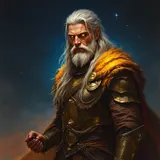
Heimdall
The Guardian
EarthVigilant, dutiful, and alert. Heimdall sees what others miss and guards the stability of the whole.
Tyr
The Judge
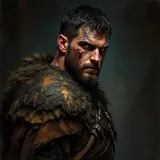
EarthJust, courageous, and principled. Tyr makes the difficult choices others avoid, guided by a strong moral compass.

Baldur
The Radiant
WaterWarm, optimistic, and inspiring. Baldur brings light in dark times and sees the good in every situation.
Hel
The Seer
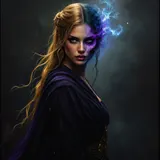
AetherIntrospective, profound, and transformative. Hel explores the depths of human experience and guides transformation.
Njord
The Navigator
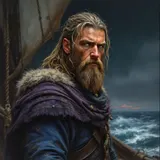
FireSocial, diplomatic, and connecting. Njord navigates effortlessly between different worlds and brings parties together.
Skadi
The Mountain Hunter
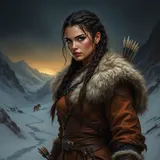
EarthIndependent, persistent, and reserved. Skadi walks her own path and is not distracted by the crowd.
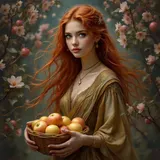
Idun
The Renewer
WindOptimistic, innovative, and resilient. Idun brings fresh energy and sees in every setback an opportunity for renewal.
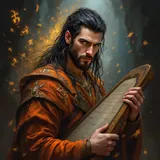
Bragi
The Storyteller
FireEloquent, creative, and inspiring. Bragi captures the essence of experiences in words that touch and motivate others.

Ullr
The Sharpshooter
EarthFocused, disciplined, and a master of his craft. Ullr strives for perfection and does not let anything distract from his goal.
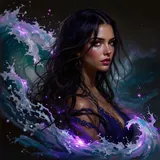
Ran
The Deep Sea
AetherEmotionally deep, intuitive, and mysterious. Ran senses currents that lie hidden beneath the surface.
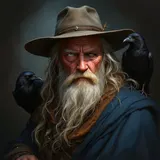
Odin
The Wise Strategist
WindKnowledge-seeker and strategic thinker. Odin sees connections where others see chaos and sacrifices comfort for deeper understanding.
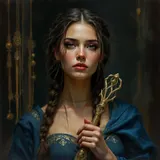
Frigg
The Weaver
WaterCaring, wise, and connecting. Frigg weaves the threads of a community together and offers support where it is needed.
Frequently asked questions about the Norse archetypes
What exactly are the 16 Norse archetypes?
The sixteen archetypes are narrative personality profiles derived from your Big Five scores and your three strongest facet combinations. Each archetype is modelled on a god, goddess or figure from Norse mythology, such as Odin the Wise Strategist, Freyja the Connector or Skadi the Independent. They are not zodiac signs or types — they translate scientific trait scores into a narrative frame that makes patterns easier to recognise. The aim is that you see yourself in a rich image instead of an abstract list of numbers, without losing the underlying measurability.
Why Norse mythology and not another pantheon?
We chose Norse mythology because the figures are psychologically complex: nearly every god carries both strength and shadow, which mirrors how personality actually works. Odin is wise but sacrifices his eye for knowledge. Loki is creative but unreliable. That ambivalence makes it possible to capture both the strong and the vulnerable sides of a personality in one image. The pantheon is also broadly accessible across cultures and has not previously been mapped onto a personality framework, which allows us to develop it as proprietary IP without imitating existing models.
How is an archetype assigned to me?
Your archetype is calculated deterministically from your Big Five scores on the five main dimensions and fifteen facets. Each archetype has a predefined profile — for example Thor scores high on Extraversion and Conscientiousness, low on Neuroticism — and the algorithm finds the best matching profile via a distance measure. That means two people with identical scores always receive the same primary archetype. We also show your second and third best matching archetype, because personality is rarely fully captured in a single profile.
What is the difference between my primary and secondary archetype?
Your primary archetype is the profile closest to your average Big Five pattern — the image you recognise most strongly in yourself. Your secondary archetype is the next best match and shows a second face, often a supporting or complementary side. In practice you activate different archetypes in different contexts: a Frigg-primary with Tyr-secondary may be nurturing at home and principled at work. The secondary archetype helps make that dynamic character visible.
Can my archetype change over the course of my life?
Yes, although usually slowly. Big Five traits are relatively stable after age thirty, but facets can shift through life experience, work, therapy or deliberate development. As a result your secondary archetype may swap places sooner than your primary one. We recommend at least ninety days between repeat assessments so you measure actual development rather than day-to-day variation. In your dashboard you can see how your archetype mix evolves over time.
Are these archetypes the same as the sixteen MBTI types?
No. The number happens to match, but the foundation is fundamentally different. MBTI types are four binary dimensions that sort people into one of sixteen boxes, with no scaling. Our archetypes are derived from continuous Big Five scores on five dimensions and fifteen facets — a much richer measurement frame. We also display your second and third place archetype with percentages, keeping the picture nuanced. The archetype is a narrative layer on top of science, not a replacement for it.
How do I use archetypes in a team or organisation?
In a team the archetype overview helps you quickly see which qualities are richly represented and which are underrepresented. A team with many Odin and Heimdall archetypes thinks sharply but may lack the action of Thor or the connection of Freyja. At the individual level it provides language for coaching conversations: instead of speaking abstractly about Conscientiousness, you can discuss concretely how an Ullr profile handles perfectionism. For hiring decisions the Big Five score remains leading; the archetype is a communication aid, not a selection criterion.
Is this archetype model comparable to other personality systems?
The Norse Mythology Framework with these sixteen archetypes is unique and proprietary IP of Theuws Consulting. Other systems use Jungian archetypes, enneagram types or organisational role models, but none link mythological figures systematically to Big Five scores and facets. The scientific foundation (Big Five scores and facets) rests on validated psychometrics; the archetype layer itself is an interpretive, deterministically derived and editorially developed model that we continuously refine based on user feedback. It is independent of existing commercial assessments and not derived from previously published work.
Discover your archetype
Curious which archetype fits you? Take the free assessment and find out.